I’ve updated my section in Foundations of Faith (Out of Print) about the Pope to reflect the sad news of the passing of Pope Francis. as developments emerge, I’ll be updating this page.
Introduction
We have all seen pictures of the pope. He often looks like he stepped from the pages of history into our world. In many ways that is who the pope is: a bridge between our tradition and the present day, carrying the message of Christ to a modern world. When he can, he travels around the world to visit various countries and their people. It is my hope that you will come to know and understand better the important role the pope plays in Catholicism today.
The questions posed here are only the beginning of our inquiries into the role of the pope, the Catholic Church and the Magisterium (the official teaching authority of the Church).

- Who is the pope?
The pope is the leader of the Roman Catholic Church. He lives in Vatican City, which is a tiny country within the City of Rome. The pope, together with his brother bishops, watches over more than 1.2 billion Catholics. Talk about responsibility!
Let’s start by looking at a few of the official titles for the pope:
Bishop of Rome: This title goes back to the time of the apostles, when the Christians of Rome were led by a person they called the bishop. This leader is thought to be St. Peter, who was one of Jesus’ followers. Peter became the first leader of the early Christians after Jesus died. We call Peter the first pope.
Vicar of Jesus Christ: Vicars were Roman officials who represented the emperor to the people and the people to the emperor. The early Church used this model to describe the special role of the pope. (All bishops are called vicars of Christ, because they succeeded the apostles.)
Successor of the Prince of the Apostles: St. Peter is described as the Prince of the Apostles. The pope is always seen as someone who followed or succeeded St. Peter in this job as leader of Christians.
Supreme Pontiff of the Universal Church: In pre-Christian times, the chief priest of Rome (often the emperor) was given this title. After the Roman Empire became Christian, the title was given to the pope. This is appropriate because the word comes from the Latin word meaning, “bridge builder”. It points to a role of the pope as a peace maker and relationshipbuilder.
Sovereign of the State of Vatican City: The pope is the ruler of a tiny country of 44 hectares (about 100 football fields) called Vatican City.
Servant of the Servants of God: This title goes back 1,500 years, to the days of Pope Gregory I. It was an attempt to show that despite all the other glorious titles given to the pope, the person occupying the office needs to have great humility, because he is a servant of the people.
- According to the Catholic Encyclopedia, there have been 264 popes from St. Peter to Pope Francis. Some popes have the same name; for example, there have been 23 popes named John.
- Since 1958, there have been six popes:
- St. John XXIII (1958–63)
- St. Paul VI (1963–78)
- Bl. John Paul I (1978)
- St. John Paul II (1978–2005)
- Benedict XVI (2005–2013)
- Francis (2013 – 2025)

- Who was the first pope?
The Bible tells the story of Jesus calling the fishermen from their nets to follow him. (Matthew 4:18-20; Mark 1:16-18) One of these fishermen was Simon, whose name Jesus later changed to Peter. The name Peter comes from petros, the Latin word for “rock.” (Pierre, Peter’s name in French, also means “rock.”) Jesus pointed to Simon Peter and said that upon this rock he would build his Church. Peter was a surprising choice. He sometimes didn’t understand the teachings or actions of Jesus, he denied knowing Jesus before the crucifixion, and he probably could not read or write. But Jesus chose well: Peter was the first leader of an organization that has lasted for 2,000 years and has more than one billion members.
After the death and resurrection of Jesus, Peter and the other apostles spread the Good News of Jesus through the neighbouring countries. When they settled in a new city or town, a bishop became their leader. Christians set up a community in Rome, the capital of a huge and powerful empire. Rome was a dangerous place for Christians, because the Roman rulers had outlawed many religions. Many Christians died a martyr’s death because of their faith. Some were even used as human targets or as bait in the violent games played in the Roman circuses and tournaments.
Peter quickly ran into trouble with the Roman leaders. He was arrested and then condemned to die. Romans used crucifixion to torture, humiliate and kill their enemies. Peter was seen as an enemy because he was spreading a religion that was different from the official Roman religion. Legend has it that Peter told his captors that he did not deserve to die in the same position as Jesus and so asked to be crucified upside down.
Peter would not have recognized the title “pope,” because it wasn’t used at that time. It would be a few centuries before the leader of the Church became known as pope. Still, Peter is considered to be the first Bishop of Rome. Rome became the most influential Church community for many Christians. Whoever was the Bishop of Rome was seen as the primary leader of the Church.
- It is believed that St. Peter’s Basilica, the huge church in Vatican City, was built on the tomb of Peter.
- Peter’s Basilica can hold 60,000 people, more than any other Christian church in the world. For more on this beautiful church, visit https://www.basilicasanpietro.va/en/ . Millions of people visit St. Peter’s every year.
- Many early Christians hid from the Roman authorities in underground caverns in Rome called catacombs. You can still visit them today.
 Christ Delivering the Keys to St. Peter by Perugino (Sistine Chapel)
- Are popes powerful?
There are different types of power. If you have political power, you can make a difference in how cities and countries treat each other. If you have spiritual power, you can make a difference in people’s relationship with God. Let’s look at two early popes who had both political and spiritual power.
Leo the Great was pope during the fifth century, when the Roman Empire was crumbling. Warlords such as Attila the Hun destroyed villages and towns as they advanced on Rome. Leo confronted Attila and persuaded him to stop his invasion. At the time, the chaotic political system caused many people to feel unsafe. Leo saw the need for the pope to have a central role, with bishops throughout Western Christianity working with him. Until this time, many bishops were fairly independent, meeting only from time to time to decide on important issues. Pope Leo stepped up as a political leader to make places safe so that people could live in peace.
Now close your eyes and imagine monks in a monastery chanting a beautiful melody. In the year 590, a monk was summoned from his monastery to become Pope Gregory the Great. This intelligent and good man continued the work of Pope Leo the Great in making sure that the Church stayed united and organized and used political power to keep believers safe. He thought that more people should hear the message of Jesus, so he sent out missionaries to northern Europe, including England. In this way, Pope Gregory used his political power to help spread the message of Jesus.

Pope St. Gregory the Great by Gerard Seghers
- What is St. John Paul II remembered for?
Karol (Polish for “Charles”) Wojtyla (pronounced Voy-TEE-wah) was born in Poland in 1920. During the Second World War, he was forced to leave his university studies to serve the Nazi occupiers as a forced labourer in a rock quarry. He secretly joined a group of young people training to be priests, which was not allowed by the authorities. Karol also showed great courage by helping others in times of danger and difficulty.
Soon after he became a priest, the Polish Church saw that he would be an intelligent and wise leader. He became a bishop at the young age of 38 and played an important role in the Second Vatican Council. Soon after, he was appointed cardinal. In 1978, Cardinal Albino Luciani (Pope John Paul I) was elected pope, but died after only 33 days in office. In the election that followed, Cardinal Karol Wojtyla was named pope. He chose Pope John Paul II as his name.
During his time as pope, he reached out to many groups, including young people, other Christians and other religions. He built these relationships through tireless travel to 129 different countries. Although he carried on many reforms of the Second Vatican Council, he spoke out firmly in support of some traditional Catholic teachings, such as the value and dignity of human life before birth. He was also an important force in standing up to oppressive communist rule in his home country of Poland and other Eastern European states. He is seen to be one of the most influential people in bringing about the end of communism.
The pope had many enemies because of his strong stands on important issues. In 1981, a man shot and nearly killed him. In one of the most moving scenes in modern times, Pope John Paul II visited the cell of his would-be assassin and forgave him.
In later years, an increasingly frail pope spoke out against some of the worst features of our modern world: violence, greed and a lack of respect for human dignity. Pope John Paul II will long be remembered for reminding the world of the love of Christ. He was beatified on May 1, 2011, and canonized on April 27, 2014. We celebrate his feast day on October 22.
- John Paul II was pope for 26 years – the second-longest rule in Church history. Pope Pius IX served for 31 years in the 1800s.
- John Paul II was the first Polish pope and was the first non-Italian pope since 1522.

Places visited as Pope by St. John Paul II. (Source Wikimedia)
- What is Pope Benedict XVI known for?
After Pope John Paul II’s death in 2005, Cardinal Josef Ratzinger was elected pope. As a teen growing up in wartime Germany, he joined the Nazi youth, because all boys his age were expected to do so. After the war, Josef became a priest. He was a key advisor at the Second Vatican Council (1962-1965) in which the Church updated and refreshed teachings and practices to address modern issues while staying true to the mission of the Church. He was later chosen as Archbishop and Cardinal of Munich.
Cardinal Ratzinger became Pope John Paul II’s most important advisor during his long papacy. It was no surprise when other cardinals elected Josef Ratzinger pope in April 2005.
In the years since his election, Pope Benedict XVI continued the work of Pope John Paul II in his travels and in his writings. Pope Benedict is seen as a great thinker as well as a humble, prayerful man who warmly reached out to the youth, the poor and the suffering.
- Pope Benedict XVI was the first modern pope to retire, at the age of 85.

Pope Benedict blessing children.
- Who is Pope Francis?
Pope Francis was elected in March, 2013 as the first Latin American pope. Cardinal Jorge Bergoglio of Argentina was a member of the Jesuits, a religious order known for their devotion to the faith, service and learning.
Pope Francis quickly established a reputation for warmth, mercy and humility. His warmth was shown in the way he greets pilgrims at the Vatican, young people at World Youth days, and reaching personally to the poor and prisoners. His watchword was mercy. Mercy is the compassionate and forgiving approach used by Jesus. He showed mercy towards those who are on the margins of society. His humility is shown in naming himself after St. Francis who loved and lived with the poor. He followed St. Francis in his official teachings on the poor and ecology, particularly in Laudato Si’ (2016).
Pope Francis died on April 21, 2025, setting in place the process for electing a new pope.
- One of Pope Francis’ favourite paintings was Caravaggio’s Call of St. Matthew. It shows Jesus asking Matthew to join his disciples while Matthew sits at a table with gamblers. It shows that Jesus is not only merciful but also welcoming of Matthew’s gifts which were hidden to most of the other disciples at the time.
- Pope Francis asked to be buried at Santa Maria Maggiore, the Basilica where he prayed before setting off and returning from his many pilgrimages to countries around the world. It is fitting that this is his resting place to mark his final pilgrimage into God’s love.

Pope Francis
- How do popes help the world?
The leader of the largest religious group in the world has great responsibility. It is not surprising, then, that many world leaders meet with the pope about matters of global importance.
Beyond offering wise advice, the pope encourages groups in the Church that work to help the poor, the sick and the outcast. The Church supports schools, hospitals, orphanages, homes for people with disabilities, and numerous charities. The Church is also working to change attitudes and organizations that keep people in poverty and captivity.
Popes have encouraged artists and architects to create many of the world’s artistic masterpieces: beautiful paintings of religious scenes, great cathedrals and shrines, and countless musical compositions. They see beauty as a way to come closer to God.
Popes have promoted learning and the expansion of human knowledge, such as astronomy. For example, the Vatican Observatory is one of the oldest astronomical research facilities in the world. Popes have also supported education through schools, colleges and universities. Many of the earliest educational facilities were run by the church.
Perhaps the greatest contribution that popes have made is their spiritual leadership of the people of God. In prayer and worship, they have led millions to a deeper relationship with God. Through their words and example, the popes teach wisdom and compassion to a world that sorely needs these gifts. In trying times, we often turn to the pope and our bishops to learn about spiritual ways to deal with crises that threaten us.
- There are over 217,000 Catholic schools and over 5,500 Catholic hospitals in the world.
- Early forms of the Vatican Observatory have been exploring the stars since 1774. In the 1930s, the Observatory was moved to Castel Gandolfo, the pope’s summer residence, about 25 kilometres southeast of Rome. In the 1960s, the Vatican moved its observatory to Arizona, in the United States, to find clear skies unaffected by city lights.
- Recent popes have spoken out about our need for conversion in how we treat the earth, so that continued life on earth is possible. They teach that people have been given the responsibility for caring for God’s creation and must live up to that responsibility.
Becoming a Pope
- What qualifications do you need to be pope?
Pope John XXIII once said, “Anyone can become pope. The proof of this is that I have become one!” But it’s not quite that simple.
While technically any male member of the Church can be elected pope, only cardinals have been elected since 1378. So how do you become a cardinal? Cardinals are bishops who are named by the pope to advise him. A bishop is a priest who has been chosen to oversee a local diocese. So in practice, a man first needs to become a priest to be eligible to be pope.
- How is the pope chosen?
After a pope dies, all the cardinals in the world who are under the age of 80 gather at the Vatican for a meeting called a conclave. This conclave of about 135 cardinals meets in the Sistine Chapel to elect a pope who is usually from among their group.
Each man writes on a piece of paper the name of the cardinal they wish to vote for. The papers are placed in a chalice and counted. If more than two thirds of those present vote for one cardinal, they have elected a pope. If not, the cardinals pray and discuss among themselves and then vote again. This process continues until a pope is elected. If a two-thirds majority cannot be reached after several rounds of voting, the cardinals can decide to elect the pope with the most votes, if over 50 percent of them have voted for that person.
After each round of voting, the paper is stitched together and burned in a fireplace whose chimney is visible in St. Peter’s Square, outside St. Peter’s Basilica. This produces grey smoke, which tells the gathered crowds that another round of voting will take place. Once the cardinals have elected the pope, they add a chemical to the burning papers that turns the smoke white, and church bells are rung.
An announcement proclaims, “We have a pope!” Then, wearing a white robe called a cassock, the new pope is presented from an upper window to those gathered in St. Peter’s Square and to millions watching around the world. The pope then tells everyone the name he has chosen for himself. A few days later, he is officially installed in a solemn and beautiful ceremony in St. Peter’s Basilica or in St. Peter’s Square.
- When cardinals go into the conclave, they are not allowed to communicate with the outside world, not even by cell phone. If the election takes more than one day, they sleep in apartments near the Sistine Chapel. Before these were built, the cardinals slept in alcoves and broom closets!
- There have been 217 popes from Italy, 17 from France, 13 from Greece, eight from Germany, three from Spain, three from Africa, and one each from Palestine, England, Portugal, the Netherlands, Switzerland, Poland and Argentina.

The Sistine Chapel
- How do popes get their names?
Since the year 533, popes leave behind the names they were given when they were born and adopt a new name. For example, Cardinal Jorge Bergoglio became Pope Francis. This name change shows that the pope holds an important and distinguished position. Another way the pope shows his connection with tradition is the use of Roman numerals after his name. If there was an earlier pope with the same name, the new pope adds another number to his own name. For example, after Pope John Paul I died, Cardinal Karol Wojtyla chose the name Pope John Paul II.
Popes select their names for many different reasons. Some name themselves after biblical figures, as Pope Paul VI did. Some choose the name of a famous saint, as Pope Francis did. Some choose the name of a previous pope because they want to follow in his footsteps. Pope John Paul I named himself after the two popes who reigned before him: Pope John XXIII and Pope Paul VI.
- The most chosen pope names are John (23), Benedict (16), Gregory (16), Clement (14), Innocent (13), Pius (12), Leo (12) and Stephen (10).
- In 533, a Roman called Mercurius was elected pope. Because he was named after the Roman god Mercury, he changed his name to John and became Pope John II.
Symbols of the Papacy
- Why does the pope often wear special clothes?
Even if you didn’t know what the pope looked like, chances are you would recognize him because his clothes are so distinctive. The pope usually wears a long, white robe called a cassock. Cassocks come from ancient Roman clothing called tunics.
The pope also wears a white skullcap called a zucchetto. (A bishop also wears a zucchetto, but it is violet.) Many Muslims and Jews wear a skullcap for worship. To some people, it is a sign of humility before God to keep one’s head covered. Other people trace it back to the headdress worn by Jewish priests and the turbans worn by other religious leaders. For them, it symbolizes the importance of the role of religious leader. This is also thought to be the origin of the tall, pointed bishop’s hat called a mitre.
Around his neck the pope wears a Y-shaped woollen scarf called a pallium. There are two traditions about the origin of the pallium. One goes back to Jesus, who told us that his yoke is easy. (Matthew 11:30) A yoke is placed around the neck and shoulders of a person or livestock to pull a plough. The other tradition reminds us that the wool of the pallium comes from sheep and refers to the lost sheep that Jesus brought home safely (Luke 15: 3-7). This meaning emphasizes the role of the pope as a shepherd to the people. Some bishops and archbishops also wear the pallium, to show that they share in the teaching, ruling and sanctifying role of the pope.
When the pope begins his reign, he is given the Fisherman’s Ring. This ring is a sign of the pope’s connection with St. Peter, who fished the waters of the Sea of Galilee. The pope follows in the footsteps of St, Peter, the first leader of the Church after Jesus died. To show their love for the pope and the papacy, people sometimes kneel before the pope and kiss this ring.
- Until 1978, popes were crowned with a three-layered tiara. Starting with Pope John Paul I, new popes have chosen not to use this form of crown when they begin their service to the Church.

- Why does the pope have his own flag?
The symbolism of this flag shows how the pope is closely linked to Church traditions. The yellow and white colours are thought to relate to a symbol in the coat of arms: the keys. These keys are made of the precious metals, silver and gold. (White is used instead of silver because it is easier to reproduce white on flags.) The keys refer to a passage from Scripture where Jesus told St. Peter, “I will give you the keys to the kingdom of heaven ….” (Matthew 16:19) This passage gives Peter the authority to guide the Church as it tries to bring about God’s kingdom on earth. A red cord joins the keys together.
The flag also includes the three-layered papal tiara.
 Source: Wikimedia
The Pope's Work
- Where does the pope live?
The pope lives in the Vatican, in Italy. The Vatican is more than just a city; it is a small country with its own government. The pope is the head of government there. The most recognizable part of the Vatican is St. Peter’s Basilica. This is the largest Christian church in the world. It was built about 500 years ago on what Christians believe is the tomb of St. Peter. Many popes are also buried near his tomb in crypt, underneath the church.
In the Vatican you can also find offices, museums, beautiful gardens chapels, the apartment where some popes lived and a guest house where Pope Francis died.
St. Peter’s is known for its art and architecture. Michelangelo’s famous sculpture La Pietà stands near the main doors. The sculpture portrays Mary’s suffering as she receives the crucified body of Jesus into her arms. Near St. Peter’s you can find another of Michelangelo’s works: the ceiling of the Sistine Chapel. In this chapel, Michelangelo’s paintings show many scenes from the Bible, including God’s outstretched hand reaching towards Adam.
- The Vatican has its own railway station, astronomical observatory and postage stamps.
- Vatican City, which is entirely within the City of Rome, has a population of about 880 people. The Swiss Guard is the official police of Vatican City. If you go there, you can see some of them on official guard duty in their bright blue, red, orange and yellow uniforms.

Swiss Guard (Source: Wikimedia)
- What does the pope do during a normal day?
Many popes, including Pope Francis, take office when they are 70 years old or more. This is an age when most people retire, but popes don’t have this luxury. In fact, they have more responsibility as pope than they ever had before.
The pope prays several times a day. He also celebrates Mass at least once a day. He prays for all the needs of the world, as well as his special intentions for the month. You can join the pope in praying these two intentions by looking them up online.
As leader of a small country, the pope often meets with foreign leaders. He tries to influence other world leaders to seek peace, justice, human rights and responsibilities, and to ensure the safety of the Church.
The pope often meets with visiting bishops and cardinals to hear what is going on in their local areas. He also consults them about looking after the people of their diocese and in the universal Church. The pope hosts a gathering called a papal audience for those who wish to see him and pray with him.
The pope also meets with his advisors to deal with issues that come up and to make plans. This work might include ways of improving the Church, planning for visits to other countries or appointing new bishops. The pope also writes letters to individuals, to groups of bishops and to the whole Church.
This may be a typical day for the pope, but many days contain different events as well. For example, the pope may be travelling to an area in Rome – he is the Bishop of Rome, after all! He may be going to another part of Italy or to another country. Although the pope has many responsibilities, he weaves prayer and meditation into his day. In this way, he brings the sacred into his work.
- If you went to a papal audience, you would go to a building that can hold up to 7,000 people. The pope would enter the room, greet the people, share a few words and pray with those attending. This usually happens on Wednesdays. In the summer, when the crowds are larger, the audience is held outside.
- Before his final illness, one of Pope John Paul II ’s favourite leisure activities was hiking in the Alps.
- Pope Benedict XVI spent a little time almost every day walking through the Vatican gardens.
- Pope Francis used to collect stamps as a youth. After he became the Archbishop of Buenos Aires he gave up his chauffeured limousine to take public transport to work.

Pope Francis entering the Papal Audience Hall
- Who helps the pope in his work?
You can’t lead 1.4 billion people without a great deal of help. In one sense, all of God’s people work with the pope. We listen to his teachings and pray for his intentions. The faithful gather in local parishes to worship and serve, guided by the teachings of the pope and the other bishops.
After Jesus died, rose again, and ascended into heaven, the apostles continued his work on earth. After the apostles died, other leaders, called bishops, carried on their work. After these bishops died, other bishops took their place. In this way we can see that the bishop in our area is connected to the apostles. Over 5,340 bishops and archbishops around the world, together with the pope, offer spiritual leadership in local areas called dioceses.
In some of the largest communities, the bishop may also be a cardinal. Cardinals are influential advisors of the pope who help to elect a new pope when the time comes. Many cardinals lead working groups that support the pope’s work.
Other advisors also help the pope do the administrative work of the Vatican. Whether they are clergy or lay people, they all have important duties in keeping the spiritual, financial and organizational life of the Church healthy.
- The word “cardinal” is thought to come from the Latin word cardinalis, meaning “hinge” or “joint.” Cardinals are important links between the pope and the rest of the Church.
- The offices that support the pope’s work in the Vatican are called the curia. Here are the main departments of the curia:
◆ The Secretariat of State, which looks after relations with other governments.
◆ The Dicastery for Evangelization which deals with ways we nurture faith development in homes, parishes, and schools.
◆ The Dicastery for the Causes of Saints, which oversees the process of recognizing saints;
◆ The Dicastery for the Doctrine of the Faith, which looks at Catholic teachings.
◆ The Dicastery for Bishops, which serves the needs of bishops around the world.
The Roman Curia page gives links to all the Vatican offices and departments.
- Why does the pope travel to other countries?
Catholics from every part of the world look to the pope for leadership and inspiration. From time to time, the pope will travel to distant parts of the world to visit the faithful and their bishops and priests. Before he even says a word, the pope’s presence tells the people of that land that they are important members of the Church.
The pope does much more than show up and wave to the crowds. He meets with Catholic and non-Catholic leaders to discuss important issues. For example, the pope might talk to local political leaders about human rights issues, such as how child workers are treated. With bishops, the pope might talk about ways of praying with members of other religions. Sometimes the pope meets with members and leaders of other faiths. In a trip to the Holy Land, Pope Benedict XVI met with Jewish and Muslim leaders to discuss paths to peace and deeper understanding between Christians, Muslims and Jews.
These trips are more than visits, they are pilgrimages, sacred journeys that involve prayer, devotions and worship. On these pilgrimages, the pope celebrates Mass at cathedrals or in large outdoor spaces with thousands of people.
- Pope John Paul II made 102 trips and visited 129 countries when he was pope. He travelled to Poland, his homeland, more than to any other country.
- The pope travels in a car, affectionately called the “Popemobile.” This car is designed so that he can stand up and see the people and they can see him.

Pope Francis praying at the Western Wall in Jerusalem.
- Why does the pope sometimes speak in Latin?
Jesus spoke a language called Aramaic. He could also read Hebrew, the language of the scriptures. As soon as followers of Jesus spread his message beyond the shores of Palestine, they wanted to translate the good news into other languages. Most people in the areas around Palestine spoke Greek. Soon the followers of Jesus wrote down the Gospels, letters and other holy books in Greek.
As Christianity spread west into the heart of the Roman Empire, followers there wanted to be able to learn and worship in their own language.
Latin was the language of the Roman Empire and soon became the official language of worship of the Western Church. St. Jerome translated the Bible from Hebrew and Greek into Latin. As the Bishop of Rome, the pope was recognized as the leader of the Western Church, so he would speak in Latin.
By the time the Roman Empire ended, Western Christianity was established in Europe, West Asia and North Africa. Many areas had their own language, but many priests and monks in Western Europe used Latin to communicate with each other. There was another important reason to keep Latin as the official language. At a time when the Church no longer had the protection of the Roman army, Christians needed to stick together. Worshipping together in Latin was an important symbol of unity in a time of great distress.
Until the 1960s, the prayers of the Mass were in Latin. At the Second Vatican Council, the bishops decided that it was more important for people to understand the Mass in their own language than to keep Latin as a symbol of unity and tradition. This change helped worshippers to focus on Jesus Christ as the proper sign of unity for Christians.
There are times in worship when it is good to emphasize the tradition and unity of the Church. At such times, you may hear Latin spoken. The pope uses Latin when he doesn’t want to show a preference for any language. His official letters, such as encyclicals, are written in Latin to show that they are important messages for the whole Church. The letters are then translated into many languages so more people can understand them.
- When a new pope is announced to the world, the Latin words “Habemus Papam!” are spoken. This means “We have a pope!”
- Why does the pope make rules for Catholics?
Chaos usually breaks out when the rules aren’t clear. When humans do things that are complicated, it is best to follow the wisdom of those who have done those things before or to follow the rules laid out for a system. Life is about as complicated as it gets. People hurt each other without even meaning to. So, all cultures have rules to make things easier. For example, almost all cultures agree that you shouldn’t deliberately hurt someone else or steal from them.
Christians found helpful rules for living in the wisdom of the Jewish people and especially in the teachings and example of Jesus Christ. The Church carried on in the footsteps of Jesus and the apostles by applying Christian ideas to new situations, such as bioethics and nuclear war.
As new issues arise, such as creating artificial life, global warming and online communications, the teachings of Jesus need to be interpreted again and again. The pope works with bishops and experts to write formal statements on these topics. These statements contain rules to help people live holy lives in difficult times. Decisions are made after long periods of prayer and research. Sometimes people get impatient with the Church and want teachings changed to match what is popular and easy. But the pope cannot ignore the teachings of the Gospel, and so he seeks the guidance of the Holy Spirit through prayer.
- Canon law lists all the official rules of the Church.
- The Catechism of the Catholic Church contains the teachings and explanations for many of these laws.

Some important Catholic texts including the Code of Canon Law and the Catechism of the Catholic Church
- How does the pope show his love and support for young people?
In 1984, Pope John Paul II hosted the first World Youth Day in Rome. Young people from around the world came together to worship, celebrate and serve together. This event is now held every two or three years, in a different country each time, and lasts for several days. World Youth Days have been held in Argentina, Australia, Brazil, Canada, France, Germany, Italy, Panama, Philippines, Poland, Portugal, Spain, and the United States.
The host country prepares by setting up huge outdoor facilities for gatherings and planning the procession of the World Youth Day Cross from place to place. The youth visitors, called pilgrims, often arrive before the events begin. They stay in dioceses around the country, doing acts of service, prayer and worship. The opening festivities often include celebrations and prayer services marked by great joy. The pope usually joins in these events, celebrating Mass and taking part in the Stations of the Cross. The grand finale is an overnight vigil where everyone sleeps under the stars and hundreds of thousands of people celebrate the final Mass together. The Mass is also broadcast so people all over the globe can watch.
Recent popes have also reached out to young people by investing energy and time in Catholic schools. Pope John Paul II issued this challenge in Manila at the 1995 World Youth Day: “Are you capable of giving yourselves, your time, your energy and your talent to the well-being of others? Are you capable of love? If you are, Church and society can expect great things of each one of you.”
- The largest World Youth Day Mass was held in Manila in 1995. Five million people attended! This is the largest Mass on record.
- In years when there is no international gathering, World Youth Day is celebrated around the world on Passion (Palm) Sunday. The pope gives a special message for youth on that day.

World Youth Day logo for Seoul 2027
- How can we help the pope in his work?
Catholics see the pope and the bishops as following in the footsteps of the apostles. Jesus called upon the disciples to continue the work of teaching the Good News and healing people physically and spiritually. We can work with the pope in many ways to help the world become a more loving, just and prayerful place. To do this, we must develop some good habits.
In our homes, we are not only to use kind words, but also to do kind deeds. The pope calls us to serve each other as brothers and sisters. The habit of kindness serves others, but it will also make your life brighter. You will know that you can make a difference in other people’s lives.
Another important task is to continue to learn about our Christian story and our Catholic teachings from your parish or diocese. There’s a lot of good information on the Internet, too, but make sure the sites you visit are reliable sources. You can find the Vatican on social media sites. Develop the habit of curiosity about the Catholic faith.
The pope is a very busy man with great responsibilities, yet he finds time several times a day to pray. Prayer is a way of opening our hearts and minds to God. We can pray familiar prayers such as the Our Father, we can pray to God using our own words, or we can pray by listening for how God is speaking to us. We might hear God in the words of the Bible, in the advice of wise people, or in the beauty of creation. Catholics believe that we connect with God most deeply through the Mass, so this is another place to pray. If we take time to pray daily, this good habit will bring us alongside the pope in making this world a more sacred place.
- To find the social media sites go to the links in the main Vatican website at https://www.vatican.va/content/vatican/en.html
- Praying at the kitchen table is a great way to bring your family together. Say or sing grace before meals together, or pray the Our Father, the Hail Mary or the Rosary as a family.
Challenging Questions
- Why doesn’t the pope sell all the treasures of the Church to help poor people?
Enemies of the pope and the Church often accuse the Vatican of hoarding millions of dollars while poor people starve. This view is based on the belief that the Church has vast resources in its artwork and treasures that it could easily sell. Yet many of the riches of the Church are a gift of beauty to the world found in art and in sacred buildings. The Church must legally and morally preserve them for future generations. While the Church in the past may have had the money to build beautiful cathedrals and buy art, it does not have extra money for these projects today.
The pope does not own anything – not even a home or a car. He doesn’t need anything like that. He has responsibility for how the Church spends its money, but the days when popes made money from their papal office are long gone. His life is devoted to serving God, God’s people and God’s creation.
The Church is a large organization that is responsible for over a billion people throughout the world. The Church needs to manage its resources carefully to help people now and in the future. Today, the Church is the largest source of charitable support in the world. Twenty-five percent of the financial support worldwide for people with HIV/AIDS comes from Catholic churches or organizations, including health care and educational institutions that different Church groups have set up.
- Catholic teaching tells us that we must have “a preferential option for the poor.” That means taking particular care of the most vulnerable, as Jesus did.
- Catholics have important ways of supporting the poor through aid groups including Development and Peace (Canada), Catholic Relief Services (United States), CAFOD (United Kingdom) and Caritas (many countries).

Development and Peace is part of the Caritas Internationalis
- Why is the pope always a man?
According to the New Testament, all the apostles whom Jesus left behind to continue his work were men. The pope and the bishops trace their leadership roles directly back to these apostles. In the early days of the Church, many of the popes were deacons. As the role of the priest and bishop became defined, the Bishop of Rome was accepted as pope. So, there has been a long tradition of having only males as deacons, priests, bishops, cardinals and popes.
This does not mean that there is no role for women in the Church. In recent years, the Church has canonized as many women as men. It has spoken out for equal rights for women in the workforce, in politics and in other areas of society.
- Women have had important roles in Church history. Mary, the Mother of Jesus, was chosen to bear God’s son. St. Catherine of Siena, St. Hildegard of Bingen, St. Teresa of Avila and St. Theresa of Lisieux are Doctors of the Church because of their contributions to theology. One of the most beloved and influential Catholics of recent years is St. Teresa of Calcutta, who cared for the poor and dying in India and saw her work spread around the world

Four Women Doctors of the ChurchW
- What happens if the pope makes a mistake?
Although the pope is deeply connected to God, he is human and can make mistakes. Sometimes he will make little mistakes because of forgetfulness. This is understandable. If the pope has spiritual difficulties, he uses the sacrament of Reconciliation to heal wounded relationships with God and others.
In serious matters of teaching the faith, however, popes rarely make mistakes. Before making important decisions, the pope asks cardinals, bishops and other experts for advice. He also spends a lot of time in prayer to make sure his decisions are pleasing to God. The pope may speak infallibly (free of the possibility of error) on a matter of faith. This has happened only once since the Church stated in 1870 that the pope can teach infallibly: in 1950, Pope Pius XII declared that the body and soul of Jesus’ mother, the Blessed Virgin Mary, were taken up into heaven at the end of her life on earth. Many believe that Pope Pius IX’s statement that Mary was born without sin (the Immaculate Conception) is also an infallible statement.
Many years ago, there were some popes who did not lead holy lives. In fact, some of them were villains. The faithful reacted against such abuses by ensuring that the popes who followed were men of virtue and deep faith. Still, the Church has made mistakes. In recent years, popes have apologized for things that happened many years earlier.
The Church is constantly learning and growing in faith and trying to do God’s will. Many Catholics pray for the Church so that its actions help people grow closer to God and share God’s love with all people.
A number of popes have apologized for the Church’s past mistakes:
◆ Pope John Paul II apologized to the people of West Africa for Christian participation in the slave trade.
◆ Pope John Paul II apologized for how the Church treated Galileo, whose statement that the Earth revolved around the sun went against how the Church saw the world. As time passed, it became clear that the Church was mistaken because it did not yet know all the scientific facts.
◆ In the Jubilee Year of 2000, Pope John Paul II apologized for Church wrongs that were done towards women, Jews and minorities.
◆ Pope Benedict XVI apologized to young people who were abused by priests.
◆ Pope Francis apologized for the mistreatment and abuse of Canada’s Indigenous peoples

Pope Francis apologizes to Indigenous Canadians
- What happens when popes come into conflict with political leaders?
After the Catholic Church guided Western Europe through the turbulent centuries following the fall of the Roman Empire, kingdoms and empires emerged to take political control over much of Europe. At times, politicians and popes came into conflict. Here are two examples of popes who struggled with politicians to protect Church interests.
The dark ages of social chaos were replaced by a more organized political system. In Western Europe, the Holy Roman Emperor challenged the authority of the Church. The Emperor saw himself as the political ruler of Europe. Pope Innocent III, a pope in the thirteenth century, accepted this point of view as long as the Emperor accepted Innocent as God’s representative on Earth and reported to him. Innocent used his power to lay out moral laws that all Catholics were called to obey, and to set standards for how all people should worship.
If you had lived 500 years ago, it would have been hard to say that the pope was a good and wise man. Julius II was an example of a pope who used his political power in ways that didn’t follow the example of Jesus and the apostles. Julius was more of a warrior than a spiritual leader. He felt at home in a suit of armour. He was also a great supporter of the arts. Under the direction of Julius, the painter Michelangelo completed the famous ceiling of the Sistine Chapel in the Vatican, which you can still visit today. Popes who had difficulty being spiritual leaders were one of the reasons why many people left the Church during the Protestant Reformation a few years later. The Catholic Church set higher standards after this difficult time, with more focus on spiritual leadership.
- In 1054, the Eastern Orthodox Church broke away from the Western Church and refused to recognize the pope as the leader of Christianity. Recently, the pope and Orthodox leaders have been holding talks about healing these wounds.
- Between the years 1000 and 1500, the Church built beautiful cathedral churches that are still standing today. It also helped to found universities in Italy (Padua and Bologna), France (Paris) and England (Oxford and Cambridge).

Ceiling of the Sistine Chapel painted by Michelangelo
- How can popes help the poor?
Many popes followed the command of Jesus to take special care of the poor. Pope Leo XIII was one of them. Just over a hundred years ago, working and living conditions in many towns and cities were very harsh. Many people worked long hours in dangerous conditions for low wages. Pope Leo called for changes to a way of thinking that allowed people to be treated in such an undignified way. He wrote about this in a letter called Rerum Novarum, which is Latin for “New Things.” (Papal documents are often known by their Latin names, which are taken from the first few words of the text.) This letter marked a shift in Church policy: from this point on, the Church started to comment more strongly on social issues. For many years, the Church had supported schools, hospitals, orphanages and aid for the poor. This letter went further, questioning the causes of injustice instead of just working with victims of injustice.
Since Leo’s time, popes have spoken out against war, abortion, poverty, pollution and many other harmful actions. Organizations such as the St. Vincent de Paul Society, the Missionaries of Charity and Catholic pro-life groups have been inspired and encouraged by the popes’ support for social justice.
- In the early 1200s, St. Francis of Assisi was working with the poor and diseased. In many ways, St. Francis is a model for 21st-century Christians, especially in his outreach to Muslims and his concern for ecology.
- Leo XIII was the first pope whose voice was recorded. He was also the first pope to be filmed on the motion picture camera
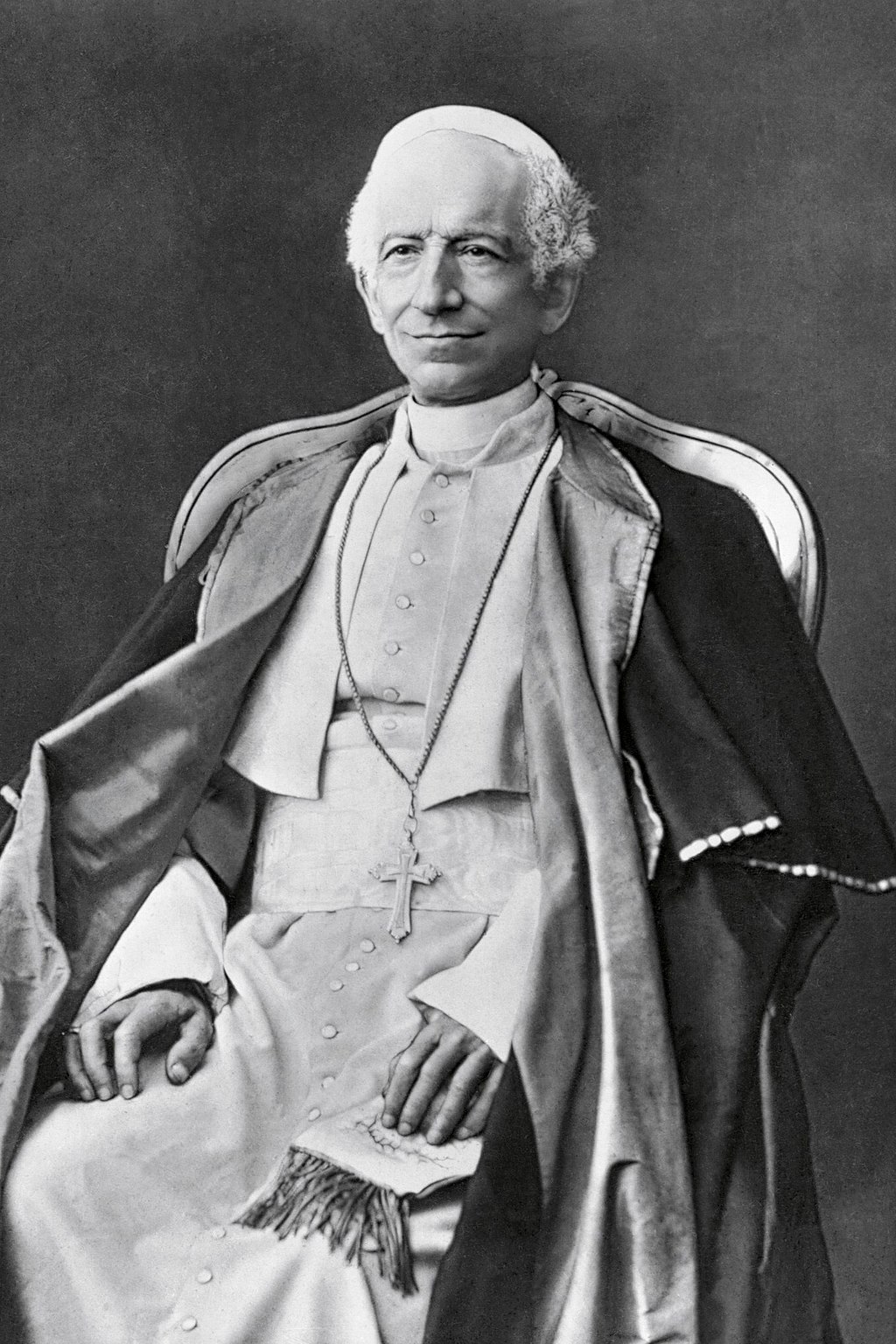
Pope Leo XIII
The Pope
Introduction
The Story of the Pope
- Who is the pope?
- Who was the first pope?
- Are popes powerful?
- Who was St. John Paul II?
- Who was Pope Benedict XVI?
- Who was Pope Francis?
- How do popes help the world?
Becoming a Pope
- What qualifications do you need to be pope?
- How are popes chosen?
- How do popes get their names?
Symbols of the Papacy
- Why does the pope often wear special clothes?
- Why does the pope have his own flag?
The Pope’s Work
- Where does the pope live?
- What does the pope do during a normal day?
- Who helps the pope in his work?
- Why does the pope travel to other countries?
- Why does the pope sometimes speak in Latin?
- Why does the pope make rules for Catholics?
- How does the pope show his special love for people?
- How can we help the pope in his work?
- Why doesn’t the pope sell all the treasures of the Church to help poor people?
- Why is the pope always a man?
- What happens if the pope makes a mistake?
- What happens when popes come into conflict with political leaders?
- How can popes help the poor?
